Once you have settled on a bag type and a fabric for a custom order, the decision that quietly shapes how the bag feels in daily use is the pocket and storage layout. A team or event buyer is not just choosing where a logo goes; you are deciding whether the people carrying these bags can reach a rangefinder without stopping, keep a phone from getting scratched, and stash a jacket when the weather turns. This is a walkthrough of how to specify that layout on a bulk order, pocket by pocket, and how the choices interact with bag type, cart use, and the branding real estate you care about.
Start with the pockets that do real work
Modern golf bags have converged on a fairly standard set of pockets, and specifying them well means knowing what each one is for. The full-length apparel pocket is the tall, slim compartment down the side that swallows a rain jacket, an extra layer, or a folded towel; it is the pocket recipients notice on a cold or wet morning. The valuables pocket is small, sits near the top, and is lined with a soft velour or fleece so a phone, watch, keys, or wallet ride without getting scratched, and it is often water-resistant. The ball pocket is usually one of the larger front pockets low on the bag and comfortably holds six to nine balls plus a spare glove. Above it, an accessory pocket keeps tees, markers, a divot tool, sunscreen, and lip balm within reach.
Two more pockets have moved from premium to expected. The insulated cooler pocket, recognizable by its foil-like inner lining, keeps a couple of drinks cold through a round and is a genuine crowd-pleaser on tournament bags. The rangefinder pocket is a small, dedicated, often fleece-lined compartment positioned for quick one-handed access, and it protects an expensive laser unit far better than dropping it in a general pocket. When you write the spec, name these pockets explicitly rather than asking for a pocket count, because a bag with eight generic pockets and no cooler or lined rangefinder slot can still miss what your golfers actually use.
Let the bag type set your pocket budget
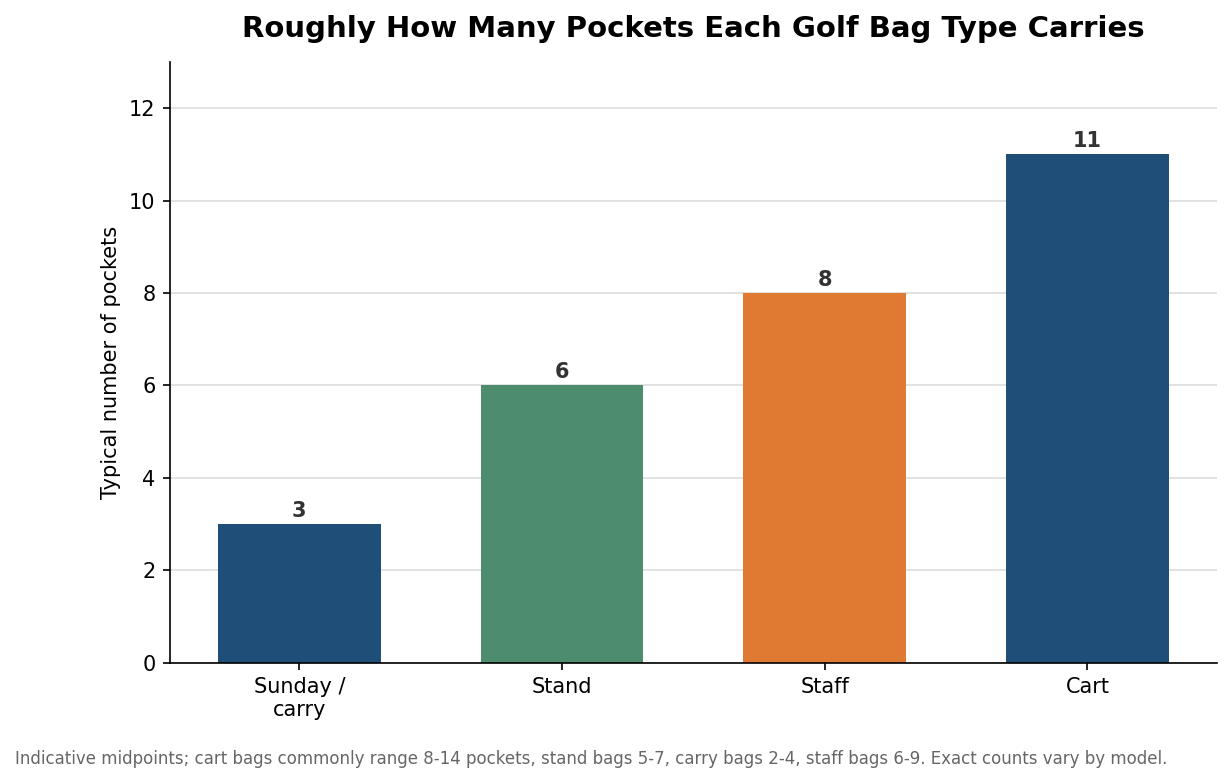
How many pockets you can reasonably ask for is largely decided by the bag type you already chose. Carry and Sunday bags are built to be light, so they typically carry only three or four pockets and force hard trade-offs; a cooler pocket on a two-pound bag is rare for a reason. Stand bags land in the middle, usually five to seven pockets, and modern versions have added lined valuables and rangefinder pockets without much weight penalty. Cart bags are the storage champions, commonly eight to fourteen pockets, because they never have to be carried and can afford the extra fabric and zippers. Staff bags are large and premium, often six to nine generously sized pockets, and they prioritize presence and durability over sheer pocket count.
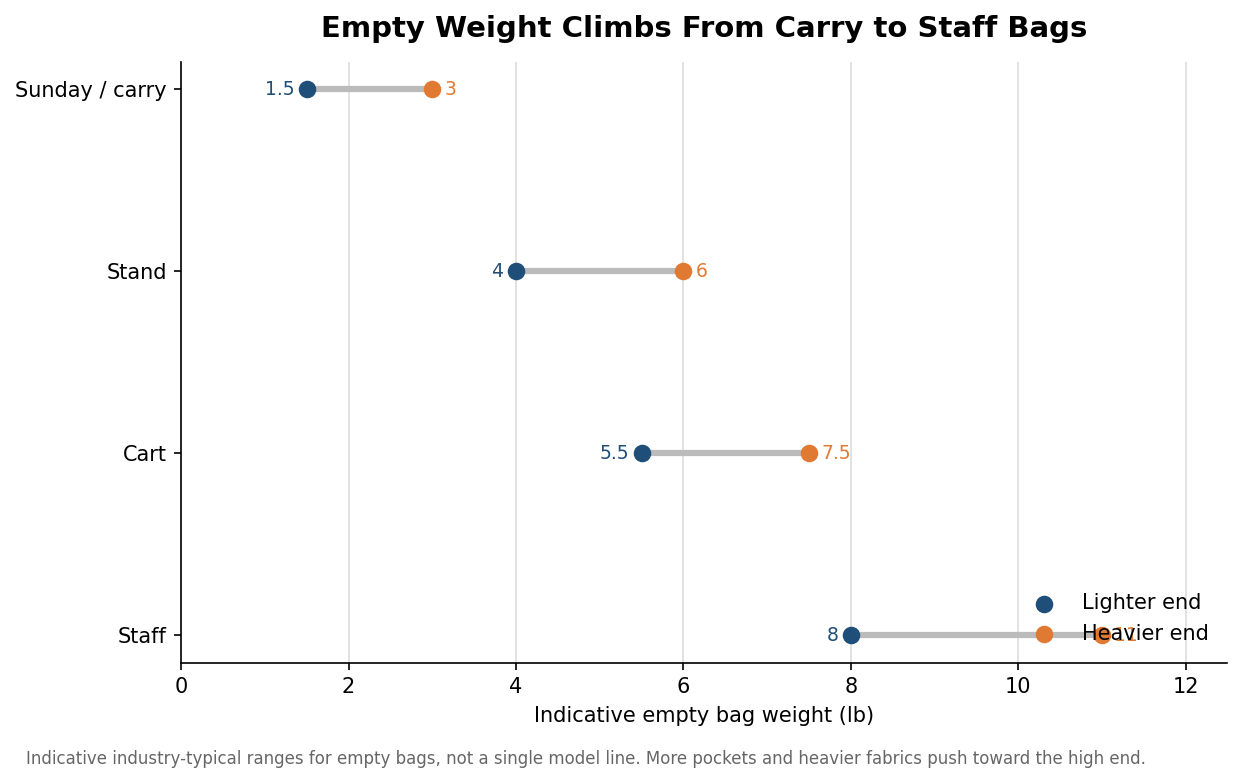
This matters for a bulk order because weight and pocket count pull against each other. If your golfers walk and carry, over-specifying pockets produces a bag they will quietly resent lugging around; if they ride every round, under-specifying storage wastes the one real advantage of a cart or staff bag. Match the pocket budget to how the bag will actually be used, not to the longest possible feature list.
Specify for the cart if that is where the bag lives
If these bags will spend most of their life on a riding cart or a push cart, a few layout details are worth calling out in the spec. Forward-facing pockets are the headline feature of a true cart bag: the main pockets angle toward the golfer so they can be opened while the bag is strapped in, instead of being pinned against the cart frame. Ask whether the pockets on the model you are customizing are genuinely front-accessible, because a bag with pockets on the back or sides loses half its storage the moment it is loaded onto a cart.
Two structural details finish the job. A cart-strap pass-through or strap channel across the back lets the cart’s straps cinch the bag without covering the pockets, and a flat, reinforced base keeps the bag stable on both riding carts and push carts. Many modern stand bags now include these features too, so if you want a lighter bag that still behaves on a cart, you do not necessarily have to jump all the way to a full cart bag. Put the words cart-strap pass-through and stable base in your specification so the factory does not substitute a base designed only for standing on grass.
Protect the branding while you configure storage
Pocket placement and logo placement compete for the same panels, so plan them together. The largest uninterrupted areas for embroidery or a printed logo are usually the ball pocket face and the side apparel panel, which are exactly the surfaces a busy pocket layout can chop up with zippers and seams. Before you finalize the configuration, mark where the primary logo, any secondary marks, and a personalization panel for names will sit, then confirm those areas stay clear of zipper lines. A clean, flat branding panel reads far better across a set of matching team bags than a crowded one, and it is easier to guarantee consistent embroidery registration when the fabric under the logo is not interrupted by a pocket opening.
The practical order of operations is to lock the bag type first, then the fabric, then the pocket layout described here, and only then the branding placement, checking at each step that the previous choice still holds. Where a figure in this guide is described as typical or indicative, treat it as a planning range and confirm the exact pocket count, dimensions, and lining on the specific model quote you receive. Configured in that order, a bulk order arrives as a set of bags that look consistent, carry what your golfers reach for, and behave the way they are meant to on the cart.